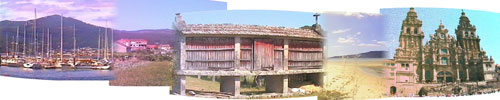
The Galician Coast
The coast of Galicia is peppered with bays and inlets which are known locally as "rias". Every ria is fed by at least one estuary and it is the meeting of the fresh and salt water, along with the silts washed off the land, that many claim result in the high quality of Galician seafood. On a map this coastline appears rugged, however on the ground it results in a myriad of picturesque bays and beaches, seemingly at every turn.
Galicia has more linear coastline than any other autonomous region in Spain and this is demonstrated by the number of ports and towns lining the coast and associated with the sea. Finding a quiet or isolated beach is never difficult in Galicia if you keep your eyes peeled for the signs.
The upper and lower "Rias"
Throughout Spain, Galicia is known as the region of a thousand rivers and most of those rivers vent into estuaries that feed into the sea through the many "rias" or bays.
These "rias" are distinctly split into the "rias altas" and the "rias baias", translating into upper and lower bays or estuaries. At the mid point between the "altas" and "baias" is the famous historic fishing port of “Finisterre”. This mid point also signals a change in the landscape and even the climate, with the upper estuaries being backed by rocky and mountainous hills with sparse vegetation and a medieval “Celtic” feel. The weather also gets cooler, windier and wetter as you head north.
By contrast, the bays and shore line below "Finisterre" seem to be shadowed by a softer more cultivated backdrop featuring not just pine and eucalyptus forests, but also fields of crops and a distinctly greener tone to the grassy meadows. The rocky, craggy hills that surround the upper estuaries also soften into more rounded hill tops as you travel further south.
Galicia's beaches
Without question Galicia has some of the most scenic and spectacular beaches you are ever likely to see and that includes the whole of Spain. Whether you like golden brown or bleached white sand, crashing waves or lagoon like serenity, the coast line of Galicia really does have it all. There is one small disadvantage however - Galicia faces the Atlantic Ocean and that means the water can be cold, at least when compared to the resorts of the Mediterranean.
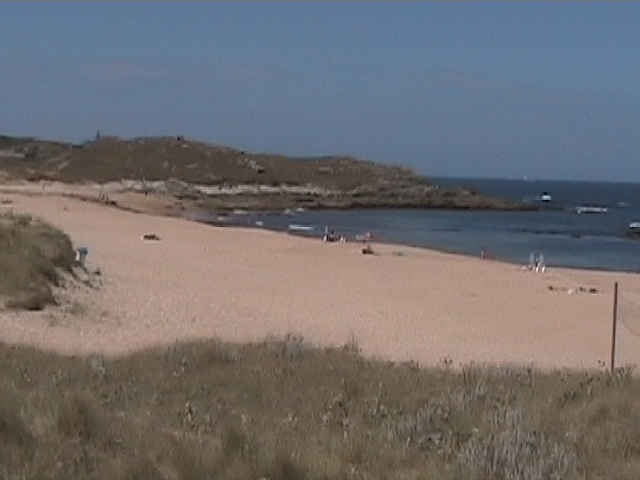
The first thing you need to know about Galicia is that it has more coast line and more beaches than any other region of Spain. The second thing you can consider is that, as a relatively new vacationing kingdom, Galicia has many quiet, if not completely deserted expanses of sand. These beaches may lack some of the facilities found in the more commercial resorts of the south, but if all you want is an abandoned sandy stretch and your own space, you can't go wrong.
If you look at Galicia on a map, it becomes evident that the coast line has many similarities to that of Norway, with lots of inlets, coves and bays. This results in two very distinct types of beaches, those facing open sea with large waves and cool water temperatures and those located in the more protected coves and bays.
The latter tend to be more lagoon like, lacking any real waves or currents and having shallow water that quickly heats up as is covers the warm sands. Beaches like this are ideal for families with small children, particularly if inflatables are used.
The beaches outside the coves are typicial of most resorts with waves and under currents and a degree of caution needs to be shown if you visit these areas.
You can find out more about the beaches of Galicia by using the menu to the right, however, there is a page about the local beaches for each of the major cities (e.g. la Coruna, Vigo etc) in the section for the location in question. Find the city or province that you are interested in by selecting from the main left hand menu. Then hunt for a beaches button in the section menu that will appear in the right hand column.